If you are supporting an autistic child not answering questions, you may find yourself asking the question again, simplifying it, offering a choice or prompting the learner to “use your words”. In a busy classroom, this can happen without us even noticing how many questions we are asking.
It is easy to interpret this as the child not understanding, not knowing the answer or choosing not to respond. However, a more useful question is often, what is happening within this interaction?
For an autistic or neurodivergent learner, answering an adult’s question can involve considerably more than knowing the answer. They may need to process the language they have heard, work out what information the adult wants, decide how they are expected to respond, find the words, symbols or other means of communication they need, and manage everything else happening around them at the same time.
When we look at communication in this way, the solution is not always to ask the question again or provide a stronger prompt. Sometimes we need to change what we are doing.
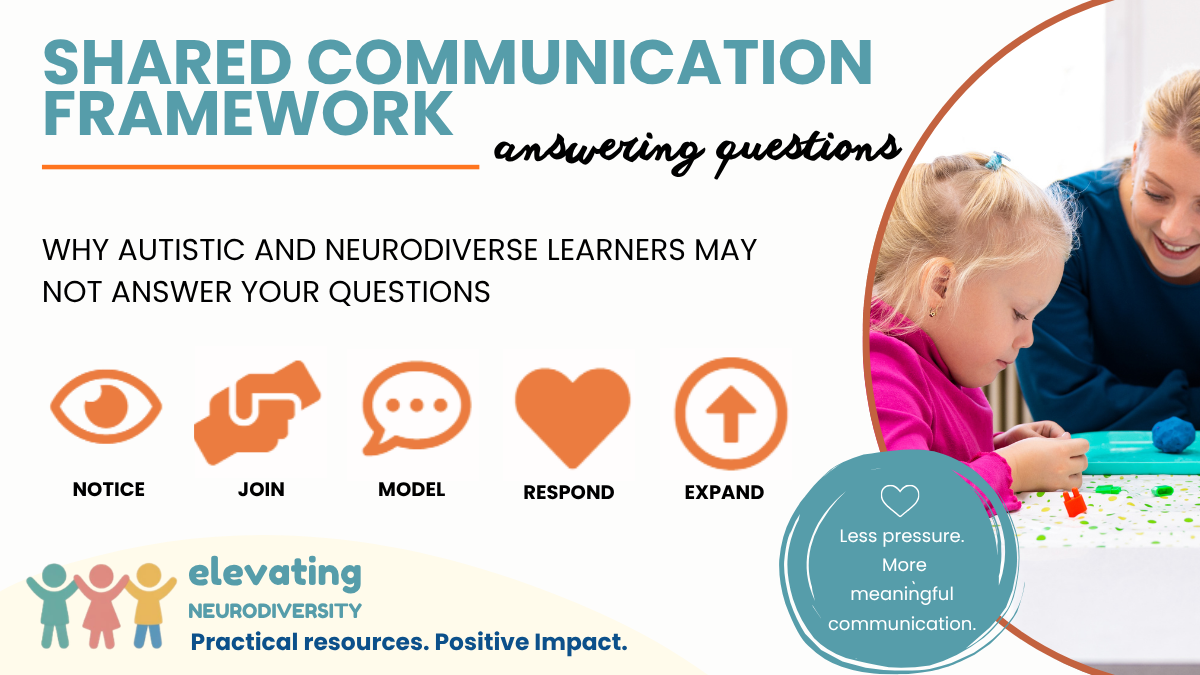
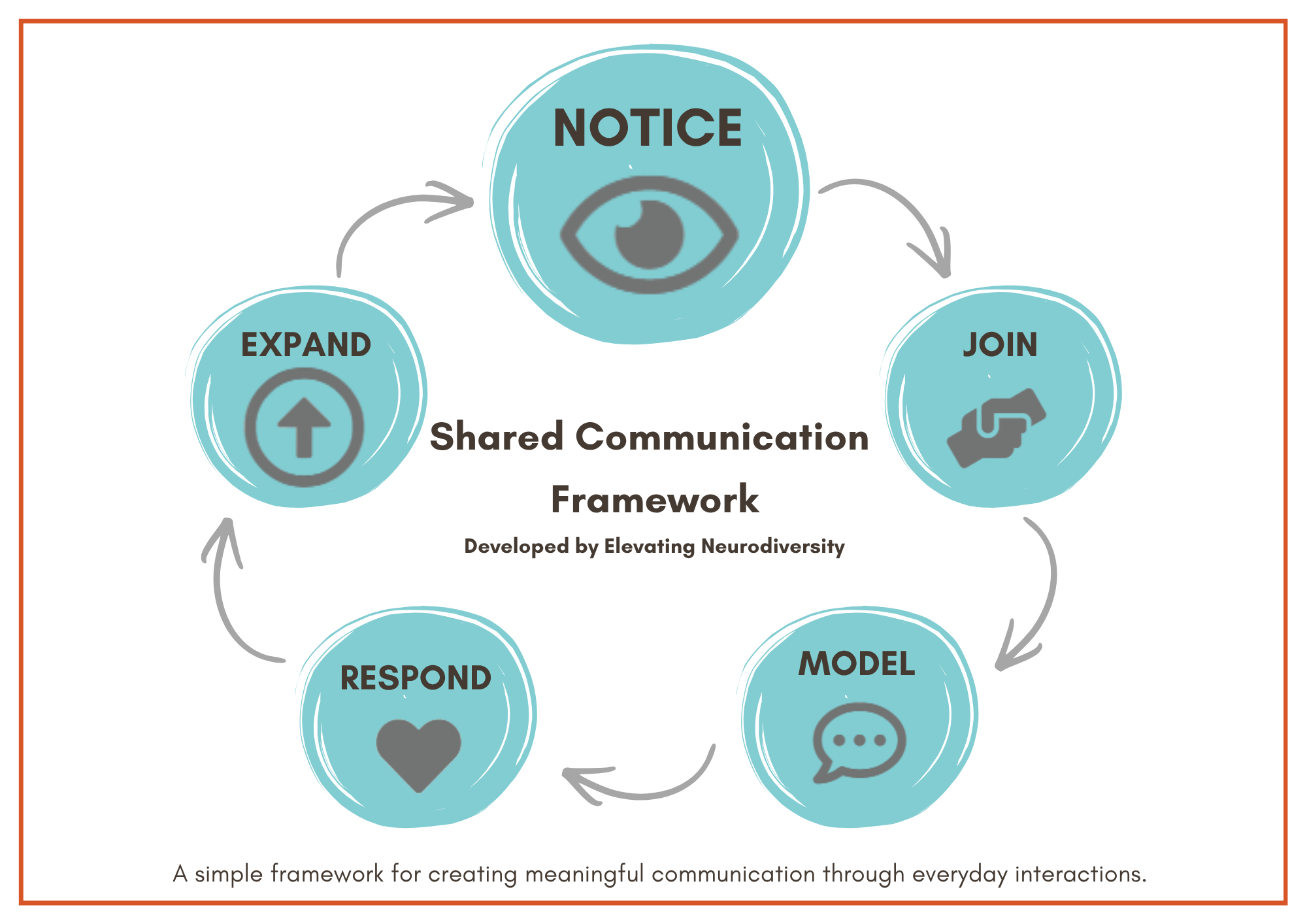
This is one of the principles behind the Shared Communication Framework, which encourages adults to notice, join, model, respond and expand communication rather than viewing communication as something we simply need to elicit from a child.
Not answering a question does not mean a child is not communicating
One of the most important shifts we can make is to stop viewing spoken answers as the only evidence that communication has taken place.
An autistic learner may communicate by reaching towards an object, moving closer to something they want, pushing something away, bringing an item to an adult, using a gesture, making a sound, selecting a symbol, using AAC or changing their body position. They may also communicate through actions that are closely connected to what is happening around them. For example, a child might not answer when an adult asks, “What do you want?”, but they may reach towards the bubbles. Another learner might not answer, “Where is the car going?”, but they may move the car underneath the bridge. A child who does not say “more” might push their bowl towards an adult when they want another serving.
These are communication attempts, even though they do not look like the spoken answer the adult was expecting.
This is why the first stage of shared communication is Notice. Before we can support communication, we need to become better at recognising how an individual learner communicates. We need to look at what they are doing, what is happening around them and what they are showing us, rather than immediately assuming that a lack of speech means a lack of communication.
Professional guidance recognises that autistic people may communicate through a wide range of methods, including speech, gestures, actions, writing, pictures and technology, and that communication support needs to take account of these different ways of communicating.
Questions can place more demands on communication than we realise
Questions are a normal and important part of classroom interaction, but it is worth considering what we are actually asking a learner to do when we pose a question.
If I ask, “What are you making?”, the learner needs to understand the question, identify what information I am asking for, decide what response is expected and then find a way to communicate that response. For some learners, particularly those who are still developing receptive or expressive language, this can be a significant amount of processing.
Compare this with an adult sitting beside the learner and saying, “You’re making a tower.” The adult has provided language that is directly connected to what the child is doing, without requiring an immediate response.
That does not mean we should never ask questions. Questions can provide useful opportunities for communication, particularly when they are meaningful and appropriate for the learner. The issue is what happens when much of a child’s interaction with adults consists of being asked questions to which they are expected to provide a particular answer.
Research examining teacher language in classrooms involving autistic pupils found frequent use of directives and close-ended questions and highlighted the importance of creating richer opportunities for communication and interaction. For me, this is an important distinction. We are not trying to remove questions from the classroom. We are trying to make sure that communication is not reduced to a series of tests in which the learner is continually expected to prove that they know the answer.
Try commenting and modelling instead of asking another question
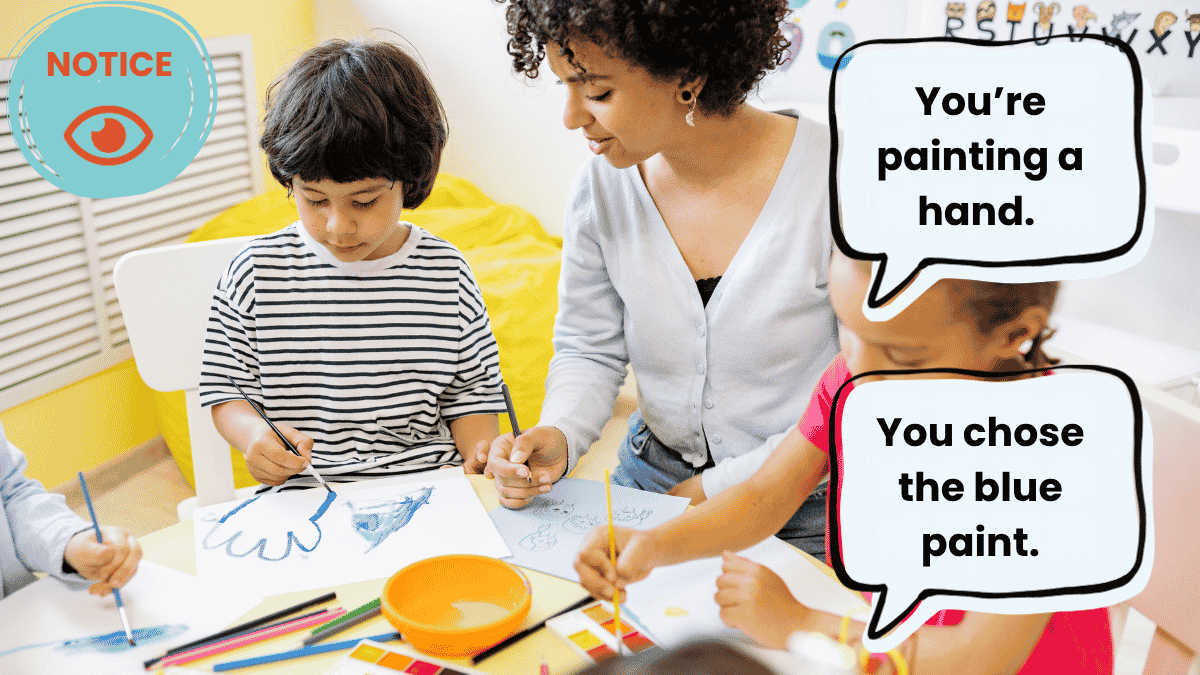
One of the simplest changes teachers can make is to replace some of their questions with comments about what they notice and language models that relate directly to what the learner is experiencing.
If a child is painting, rather than repeatedly asking, “What colour are you using?”, you might say, “You’ve chosen red,” or “You’re painting the house red.” If a learner is pushing a car along the floor, instead of asking, “Where is the car going?”, you could join the play and comment, “The car is going fast,” or “It’s going under the bridge.”
These comments give the learner meaningful language without requiring them to produce an answer immediately. They can listen to the language, process it, respond to it in their own way or use some of it themselves later.
This is modelling language, rather than testing whether the learner can produce language on demand.
It is also much easier to make modelling meaningful when we begin with what the learner is already interested in. If a child is fascinated by trains, for example, there is no need to create a separate communication activity simply to practise the word “train”. We can sit alongside them while they play, follow what they are doing and naturally model words and phrases such as “train”, “fast train”, “train coming”, “stop” or “another train”.
The communication is happening within a real experience, which gives the language a purpose.
What this can look like in an autism classroom
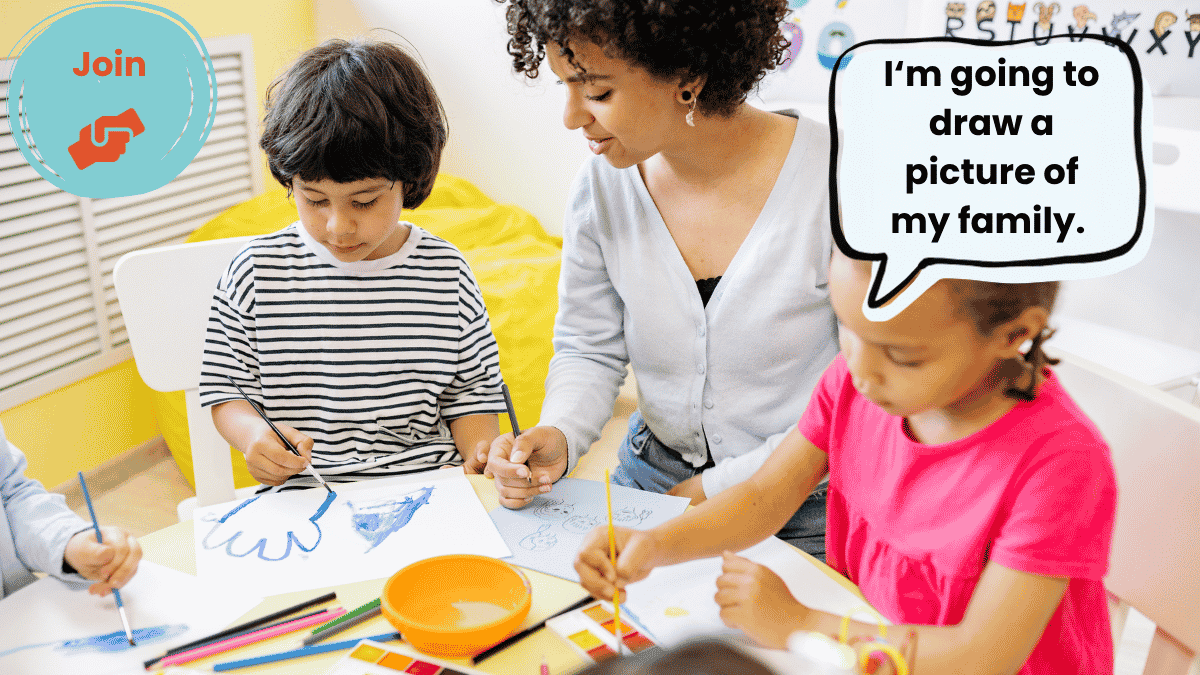
In my own classroom, I try to pay attention to what a learner is already doing before deciding what I want them to communicate. If a child is pushing cars along the floor, I do not necessarily need to interrupt the play with a question such as, “What are you doing?” Instead, I might sit alongside them and push another car. I might copy the way they are moving it and say, “Go!” before gradually modelling phrases such as “fast car” or “the blue car is going”.
If they look towards me, I respond. If they copy my action, I respond. If they make a sound, I respond. If they hand me a car, I respond to that communication. The interaction develops because we are sharing the experience, rather than because I am continually trying to obtain a particular verbal response.
This is one of the reasons I find the idea of Join so important within the Shared Communication Framework. Sometimes we become so focused on creating a language opportunity that we forget the importance of simply becoming part of the learner’s experience first.
When we join an activity that already has meaning for the learner, we create a much more natural context for communication. We can notice what they are interested in, model language that is relevant and respond to whatever communication they give us.
A successful interaction does not always end with the learner saying the word we hoped they would say. Sometimes success is that they remained engaged with us, copied an action, looked towards what we were showing them, reached for an object, used AAC or found another way to communicate their message.
We need to become much better at recognising those moments as communication.
Give the learner enough time to respond
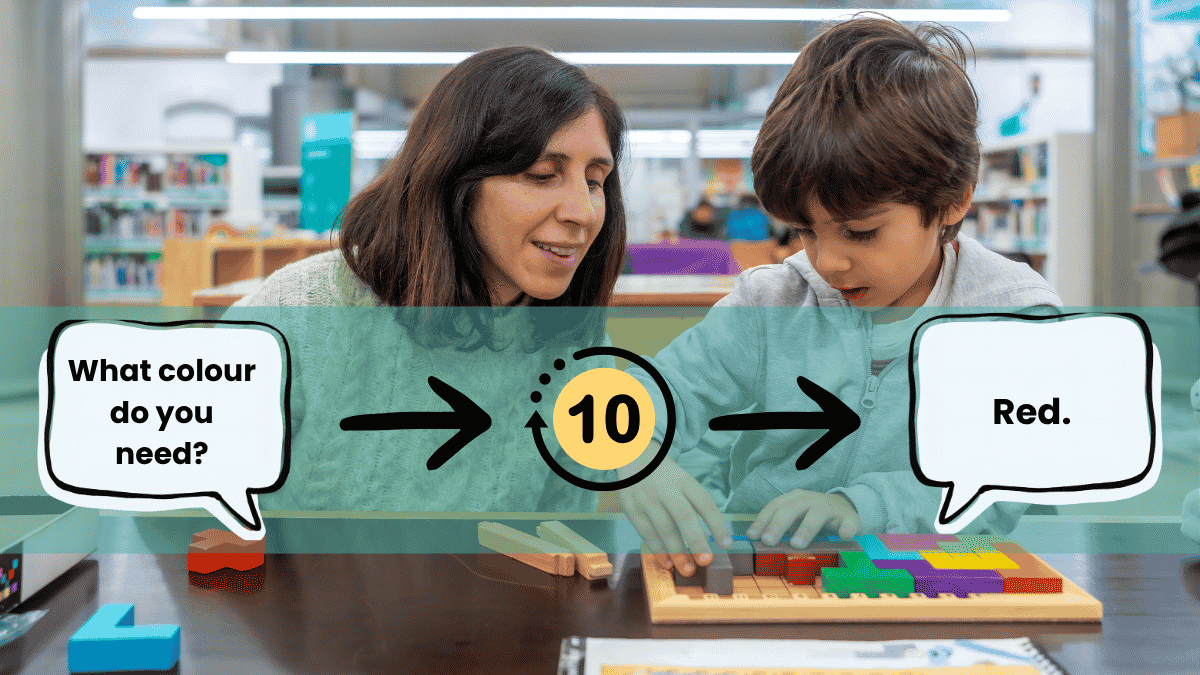
Another reason an autistic learner may not answer a question is that we simply have not given them enough time.
This is particularly easy to miss in a busy classroom. We ask a question, wait for a couple of seconds and, when nothing happens, instinctively repeat ourselves. We might rephrase the question, offer a prompt or provide the answer because we are worried that the learner has not understood. The learner may actually have needed more time to process what we said.
Try asking yourself what would happen if, after asking a question, you simply paused. Give the learner time to process the language, decide whether they want to respond and work out how they want to communicate.
The silence can feel surprisingly long to an adult, particularly when there are other children learning around us and the classroom is continuing to move. However, that pause may provide the learner with the time they need.
Professional guidance around communication with autistic pupils recommends allowing additional processing time and avoiding filling pauses with further language. This is one reason I would rather see teachers ask a meaningful question and then wait than ask several questions in quick succession.
The learner needs to have an opportunity to communicate before we decide that they cannot.
Respond to the communication that is already happening
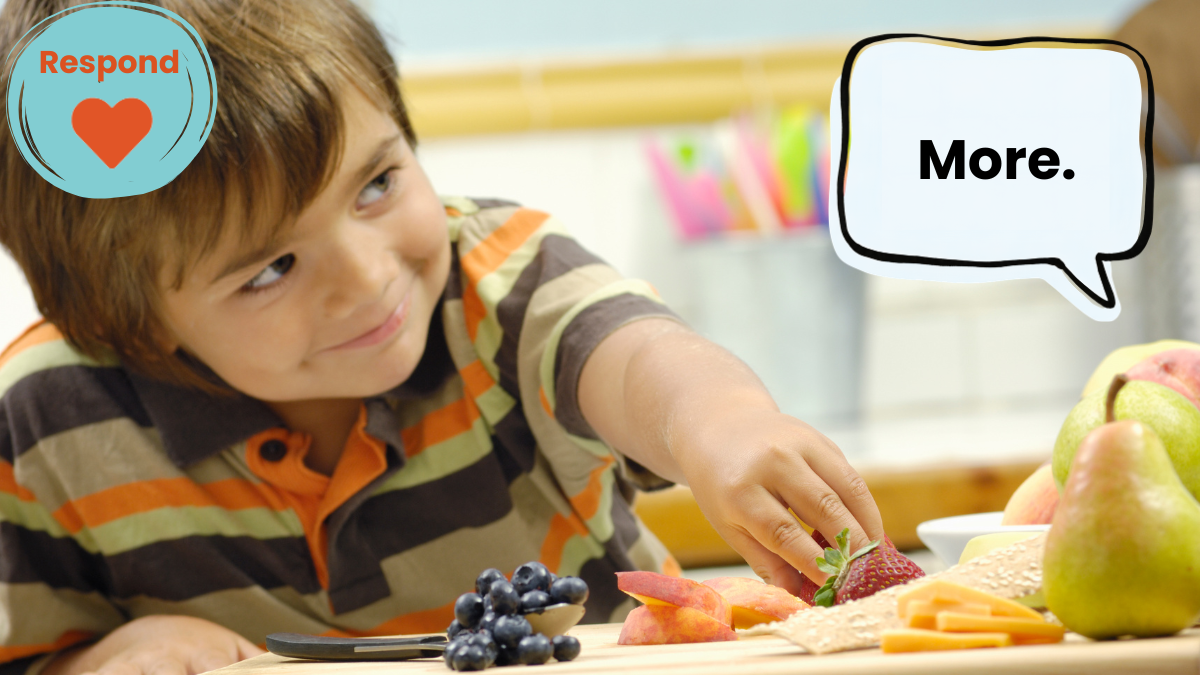
Sometimes we are so focused on getting an answer that we miss the response that is already there. A learner may not say “yes”, but they might reach towards the object. They may not answer “Where?”, but they may take you to the place they want to go. They may not say “more”, but they may push their bowl towards you. They may not answer “Do you want the red one?”, but they may pick up the red object.
When this happens, we can respond to the communication rather than immediately prompting for speech.
If a child pushes their bowl towards me, I might say, “More,” and give them more food. If they take me towards the cupboard, I might say, “You want the cupboard open,” while responding to what they are showing me.
The important part is that the learner experiences communication as meaningful. They communicate something and another person notices, interprets it within the context and responds. Over time, these repeated experiences can help a learner understand that their communication has an effect on the people and environment around them.
What if the learner does need to learn how to answer questions?
There will, of course, be times when answering questions is an important skill. A learner may need to answer questions during a lesson, communicate information to another person, participate in an assessment or develop particular language structures. Shared Communication is not about avoiding questions altogether or assuming that a child should never be expected to respond.
It is about considering when, why and how we are asking them.
If a learner is still developing the ability to communicate a single meaningful word, symbol or gesture, repeatedly asking complex open questions may not be the most appropriate starting point. We might instead model the language we want them to encounter, use visual supports, offer meaningful choices, reduce the linguistic demands of our questions or provide additional processing time.
We can still work towards more complex communication, but we need to build from the learner’s current communication profile rather than expecting them to jump straight to the response we want.
This is particularly important when communication is being taught in real classroom situations. We want learners to experience communication as something useful and meaningful, not simply as something adults ask them to demonstrate.
Get Started With the Shared Communication Framework
A free practical guide to creating meaningful communication through everyday interactions.
Learn how to Notice, Join, Model, Respond and Expand during play, routines and learning experiences.
Before asking the question again, stop and notice
The next time an autistic learner does not answer your question, try pausing before you ask it again. Think about what the learner was doing when you asked. Consider whether your question was connected to what mattered to them, whether they had enough time to process it and whether there was another way they could have responded. You might realise that the learner was already communicating through an action, gesture, sound, movement or AAC. You might decide that modelling language would be more useful than asking another question. Or you might recognise that the question itself was not particularly meaningful in that moment. These small changes can make a significant difference to the quality of communication taking place in a classroom.
The Shared Communication Framework is built around this shift in perspective. Rather than beginning with “How can I get this child to answer?”, we begin with “What is this child communicating, and how can I join them in that communication?”
That changes the role of the adult.
We become someone who notices, joins, models, responds and expands rather than someone who is continually testing whether a learner can give the correct answer.
Communication is more than answering questions
If an autistic child does not answer your question, it is worth resisting the immediate assumption that they do not understand, do not know the answer or do not want to communicate. There may already be communication happening. The learner may simply be communicating in a different way, processing what you have said, or finding the interaction more demanding than we realise.
Sometimes the most useful change is surprisingly small. We ask fewer questions, model more language, allow a little longer for a response and pay closer attention to what the learner is already showing us. When we do this consistently, communication becomes less about getting a child to produce the response we expect and more about creating shared experiences in which their communication is noticed, valued and responded to.
Communication does not begin when a child gives us the answer we are looking for. It begins when we are willing to notice what they are already telling us.
Alison Garza – Specialist Teacher