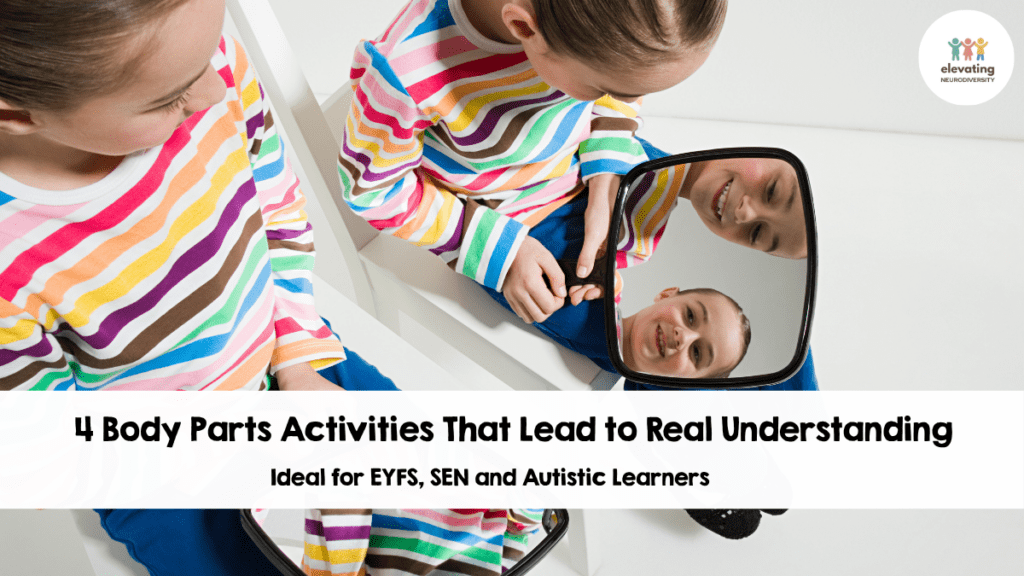
Have you ever had a child who can point to their nose perfectly during an activity… but five minutes later, in real life, they just can’t find it?
That’s the gap most body parts activities miss, and it’s exactly what slows progress for so many SEN and autistic learners.
Over the last twenty years teaching EYFS, SEN and autistic learners, I have come to the realisation that not all activities are equal. Some keep children busy. Others build real understanding. I have been able to refine how I approach teaching body parts to create a core group of activities that support body awareness, communication and generalisation. All of which I am sharing with you here, with minimal to no-prep to revisit the skill of naming and identifying body parts in real contexts
A common mistake that slows progress is treating body parts as a one-week or termly topic. It’s not. It is a skill that children will need to use several times a day in their communication with us and others. If you’re at the very beginning of teaching body parts, or you’re not sure where the gaps are yet, I break that down in more detail in my full guide to Body Parts Activities for Autism & SEN, including what to teach first and why.
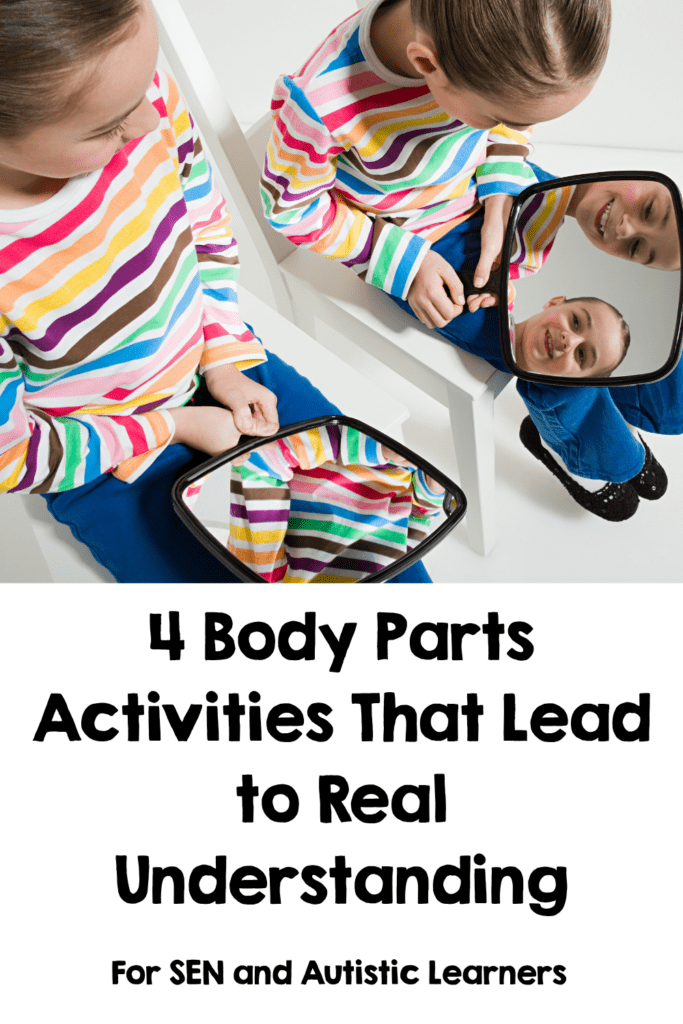
1. Mirror Work
Sit together in front of a mirror and bring attention to the face. You might ask, “Where’s your nose?” allowing time to pause, model and support as needed. This is often the point where I see a shift. A child who has been copying suddenly pauses… looks… and you can almost see them making the connection.
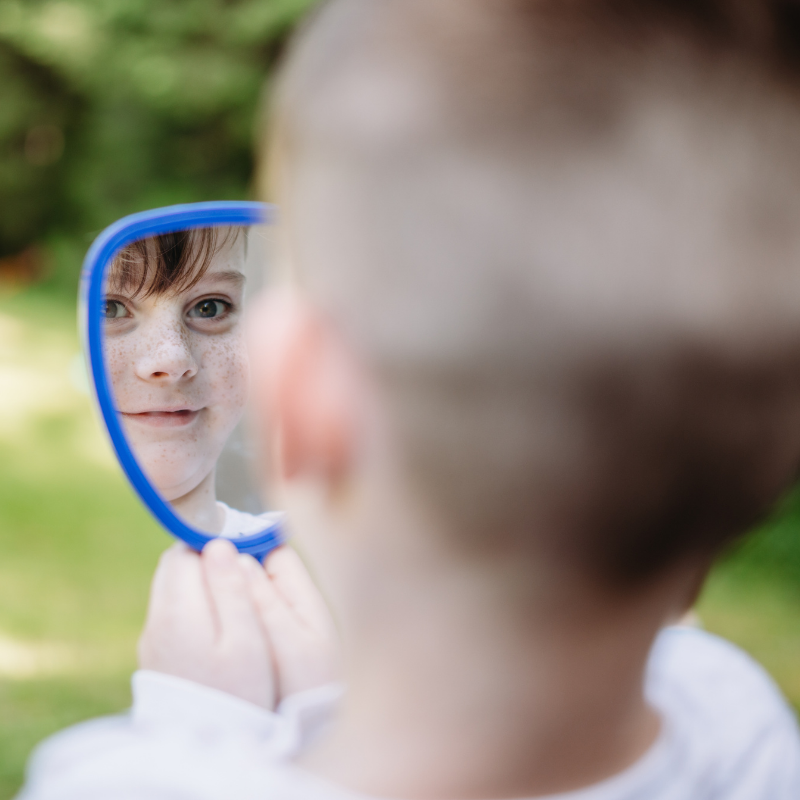
This is where understanding begins to take shape. The mirror gives the child a way to see what you are talking about, to connect the word to their own body in a real and meaningful way. You are not just teaching a label here, you are building self-recognition, developing joint attention and helping the child make sense of where their body exists in space.
For many SEN and autistic learners, this connection doesn’t happen automatically. It needs to be experienced, not just heard. By slowing things down and sharing this moment together, you are creating the conditions for that understanding to grow.
Keep it simple. Keep it consistent. Come back to it regularly. Over time, these small, repeated interactions are what turn words into something the child truly understands and can use beyond the activity.
2. Slowed-Down Action Songs
Use action songs, but slow them right down. I’ve had learners who could “do” the whole action song… but if you stopped and asked, “Where are your ears?” they couldn’t show you. That’s when I realised speed was masking understanding.
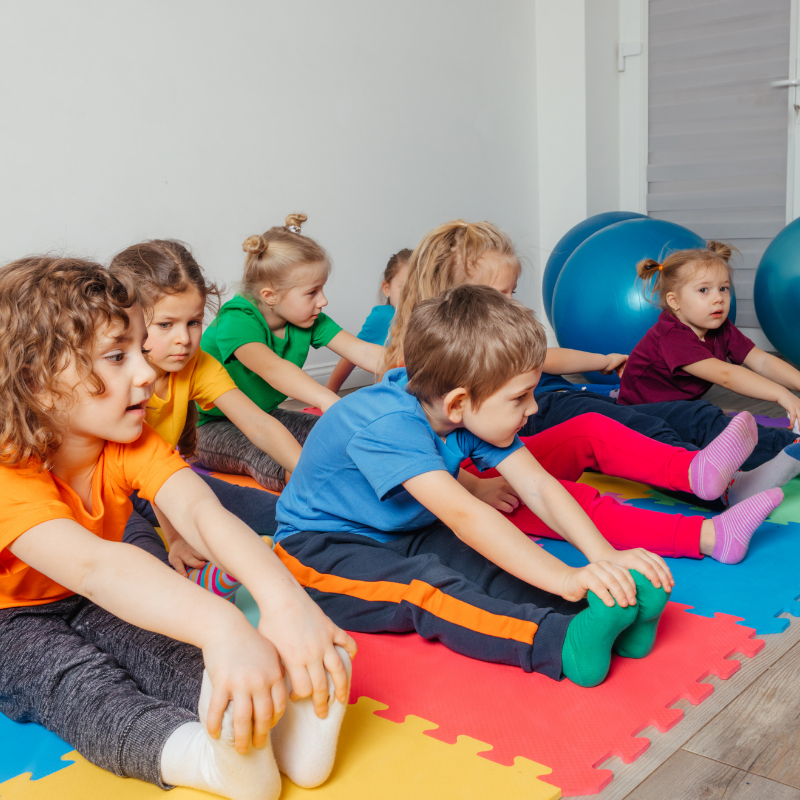
This isn’t about entertainment or keeping children busy. It’s about giving the brain time to process, connect and respond. When songs are too fast, many learners can join in with the rhythm without truly understanding the words or actions. Slowing it down changes that.
Pause between each action. Give space for the child to notice their body, to anticipate what comes next and to begin linking the movement with the word. You might find that what looks like a small pause is actually where the learning is happening. This has often be the case for my learners.
For many SEN and autistic learners, this extra processing time is essential. It supports body awareness, attention and memory, allowing the child to build a clearer connection between language and movement.
Keep it consistent. Repeat the same songs. Use the same actions. Over time, this predictability helps children move from copying to understanding and eventually to using the language more independently.
3. Matching (But With a Purpose)
Matching can be useful, but only if it leads somewhere. Too often, matching stays as a table-top task. A child can correctly pair or identify a body part on a card, but that understanding doesn’t transfer beyond the activity. That’s where we need to shift our approach.
They need to practice matching the body part on themselves, others and on dolls. This is what moves the learning forward. You are taking something abstract and grounding it in real experience. This was a complete game changer for my learners. It was the difference between children who could complete an activity… and children who could actually use the skill.
One simple way to do this is by using body parts vocabulary cards in a more interactive way. Instead of just matching, encourage children to place or stick the cards onto their own body or onto a peer or adult. I’ve also used dolls. This turns a passive activity into something physical and meaningful, helping the child connect the word to a real body part in context.
The key is intention. Matching is not the end goal, it’s the starting point. Without that next step, it risks staying as a paper-based skill, rather than becoming something the child can understand and use in everyday life.
4. Sensory and Movement-Based Play
When I first started teaching, I used to think these were just “extra” activities. But over time, I realised… this is the learning. Simple things like tracing around hands, messy play using arms and hands, or giving children opportunities to push, pull and climb weren’t just “extra activities”, they were the learning.
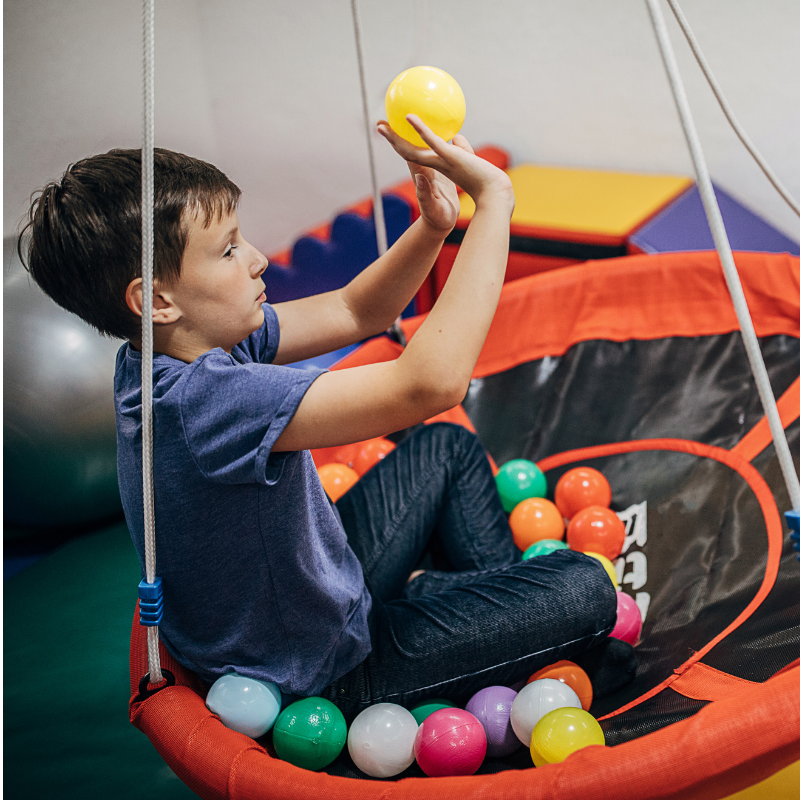
These experiences gave my learners a way to feel their bodies in action. To notice where their hands were, how their arms moved, how their body worked in space. And once that awareness started to develop, the language began to make sense.
For many SEN and autistic learners, this sensory input is essential. Without it, the words can remain disconnected and abstract. With it, you start to see real understanding, children responding more naturally, following instructions more easily and beginning to use body-related language in meaningful ways.
So if something isn’t sticking, this is often where I go back to. Less focus on sitting and naming, more focus on movement, sensation and real experience. Because that’s what builds the foundation everything else sits on.
Bringing It All Together
Remember, if a child isn’t learning the names of the body parts, it’s rarely because they can’t. It’s usually because they need more sensory input, more repetition, more real-life context and less abstraction.
If we rush to the worksheet before the body is understood… we’re building on something that isn’t there yet. If you start with the body, build the experience and then layer the language – that’s when it starts to click.
Where To Go Next
Once my learners were showing steady progress with those four body parts activities in real, everyday contexts, I started to bring things back to the table. Not instead of the movement-based work, but alongside it. This is the stage where many children get stuck, they almost know body parts, but it’s inconsistent.
Some children can point to their nose during a song or when you model it, but the moment you sit them down with a worksheet or matching task, that understanding just isn’t there in the same way. That’s not a failure, it just means they need support to transfer that learning into a different context. If you’re still building that early understanding, go back to the real-life activities first (I explain this fully in my main body parts guide).
So when I introduced table-top activities, I kept them really purposeful. We weren’t just matching for the sake of it. We were:
- matching to real photos first
- using clear, uncluttered visuals
- keeping language consistent
- and always linking it back to their own body
This is the exact gap I kept seeing in my classroom and why I ended up creating my own activities to bridge it. You can explore those here:
My Body Activities for SEN, Autism and EYFS
Everything in that set is designed to:
- build on what children already know from movement and play
- reduce overwhelm
- and help them show what they understand in a more formal way
If you’d like to save these ideas for later or come back to them, you can pin this image below: