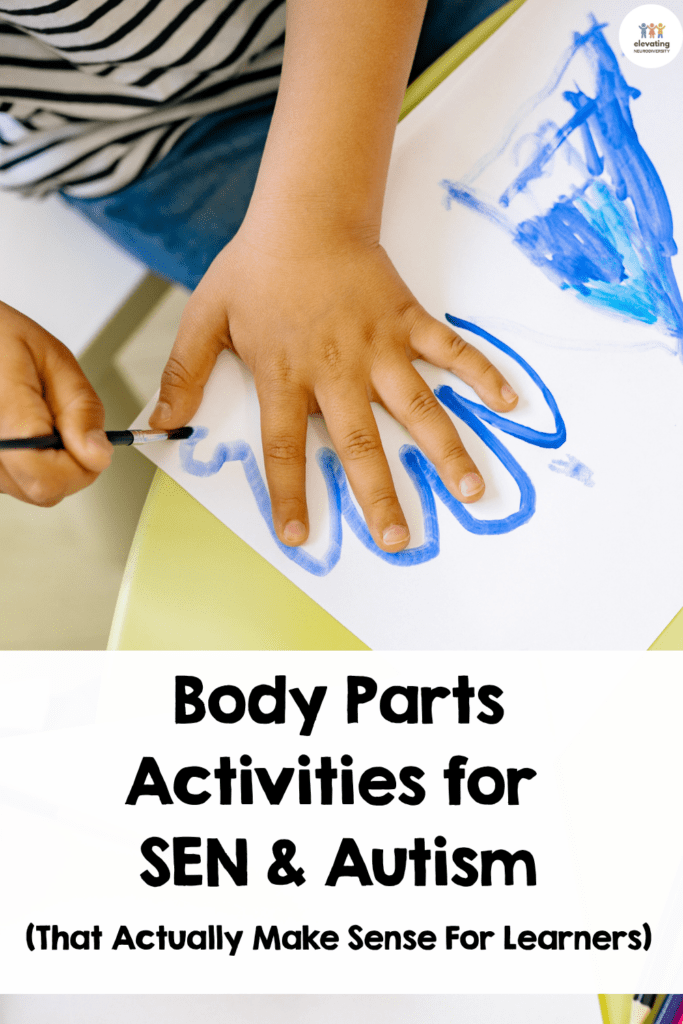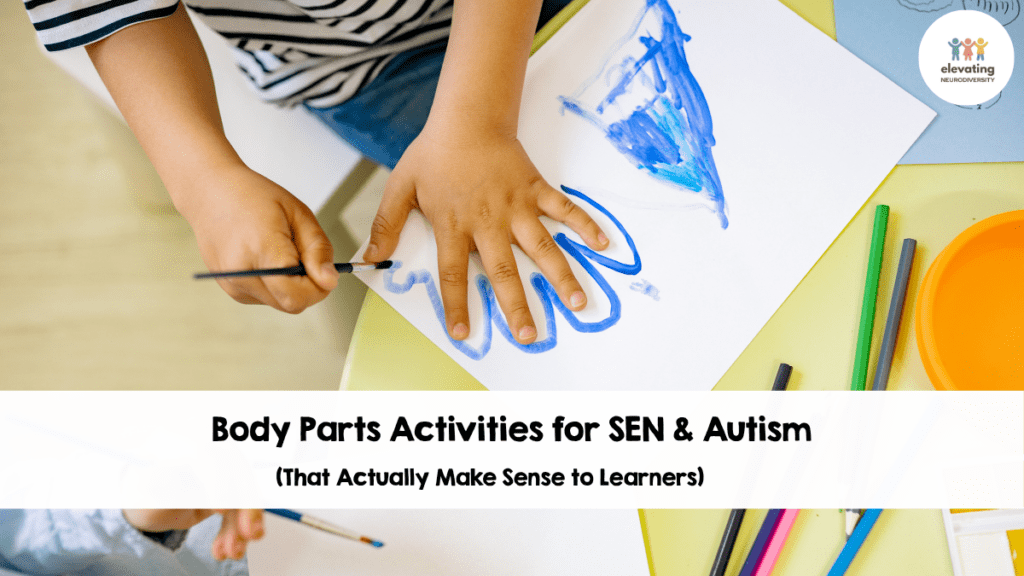
If you are looking for a way to incorporate teaching body parts as part of an ‘All About Me’ theme into your classroom or to support your learners ability to include body parts into communication, this guide is for you. I have found over the years that I can teach a body part ten times over with a song, flashcard or worksheet but still many of my autistic learners can’t find a body part when asked. That’s when I discovered, this isn’t a memory problem, it’s a meaning and generalisation problem. Because for many children, learning body parts isn’t about repeating words, it’s about building body awareness, connection and real understanding. And that changes how you and I need to teach it.
If you’re looking for practical ways to get started, you might also find these ideas helpful → My Body Activities for SEN Learners
Why Teaching Body Parts Matters (More Than It Seems)
Why even bother teaching and embedding body parts in your classroom?
When I started out teaching SEN, body parts were not high on my agenda, it was often squeezed into an ‘all about me’ theme and quickly taught with traditional activities. But I have since come to understand, body parts underpin everyday functioning, think about it, we use body parts for:
- Following instructions (“wash your hands”, “stamp your feet”)
- Communicating needs (“my tummy hurts”)
- Developing independence
- Building identity, particularly during All About Me topics
It also directly supports the curriculum and foundational skills common in EYFS, such as:
- Communication and Language
- Personal, Social and Emotional Development
- Understanding the World
But I now know there is a deeper layer.
Many SEN learners, especially autistic learners, are still developing their sense of body awareness. This links closely to sensory integration, how the brain processes sensory input and understands where the body is in space. If this system isn’t fully developed, simply naming body parts won’t lead to understanding.
Knowing the Word Isn’t the Same as Understanding It
Throughout my teaching career, I have come across many children where knowing the word and understanding it has gone wrong. I remember one child who was able to match nose correctly on a worksheet, joined in with a catchy song about the nose and was able to repeat the word when prompted. However, they struggled with identifying it on themselves, responding to body parts in real life routines (“wipe your nose”) and generalising the skill beyond focused activities. It got me thinking, why? Why can’t my student do this?
When I dove deeper into what was happening, I discovered the reason. A disconnect. The worksheets were teaching recognition, the songs fostered familiarity but ‘real life’ … that needed understanding. For many SEN and autistic learners, these do not automatically connect.
What Actually Works (In Real Classrooms)
Knowing this disconnect was a real issue, I started to make small changes that ended up making a big difference.
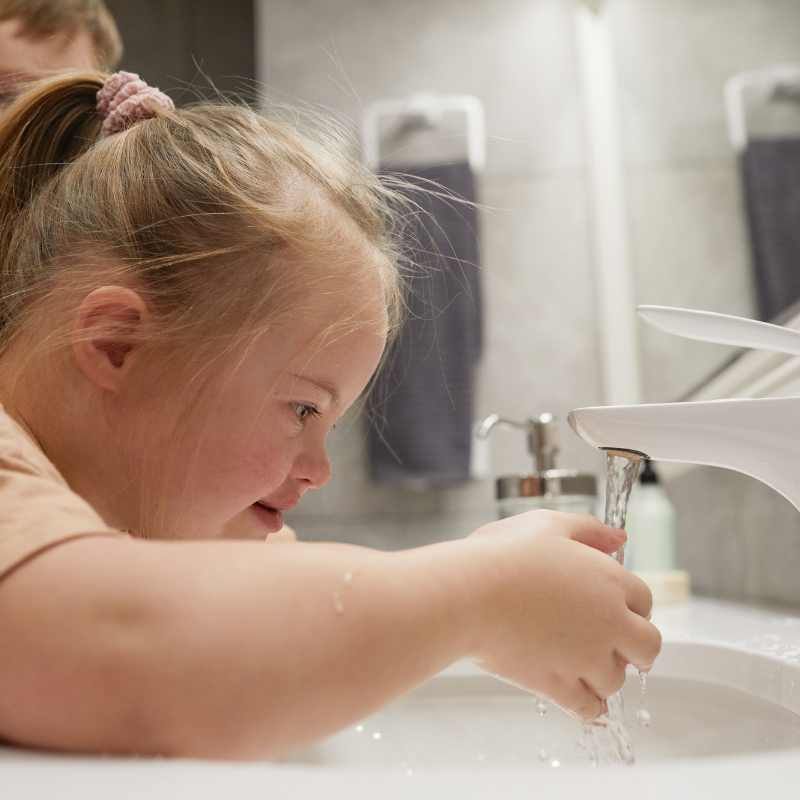
I started with the body, not the word. I chose to build awareness before expecting language. What did this look like in practice? Simple. If I was talking to a child about washing their hands, I would touch their hands and name them (“hands”). I would guide them to focus on that body part whilst maintaining touch (“Look at your hands”). Then I would tell them what to do with that body part (“hands … wash hands”). Simple, consistent, repeated … and in real life. If you do this, like me, you will be creating a strong link of sensation, movement and language. That’s where the magic happens, because it’s that which creates meaning.
I consistently paired using the names of body parts with movement. This is a core teaching tool. Movement isn’t just for engagement, it’s part of the learning process. It supports body awareness, attention and regulation, and memory and retention. So I made an effort to include lots of movement. Think, jumping (“jump up and down on your feet”), clapping (“clap your hands along with the song”), stamping (“stamp your feet when we walk to the playground”) and slow structured action songs. Because, I strongly believe, if a child isn’t learning body parts, they often need more movement, not more sitting tasks.
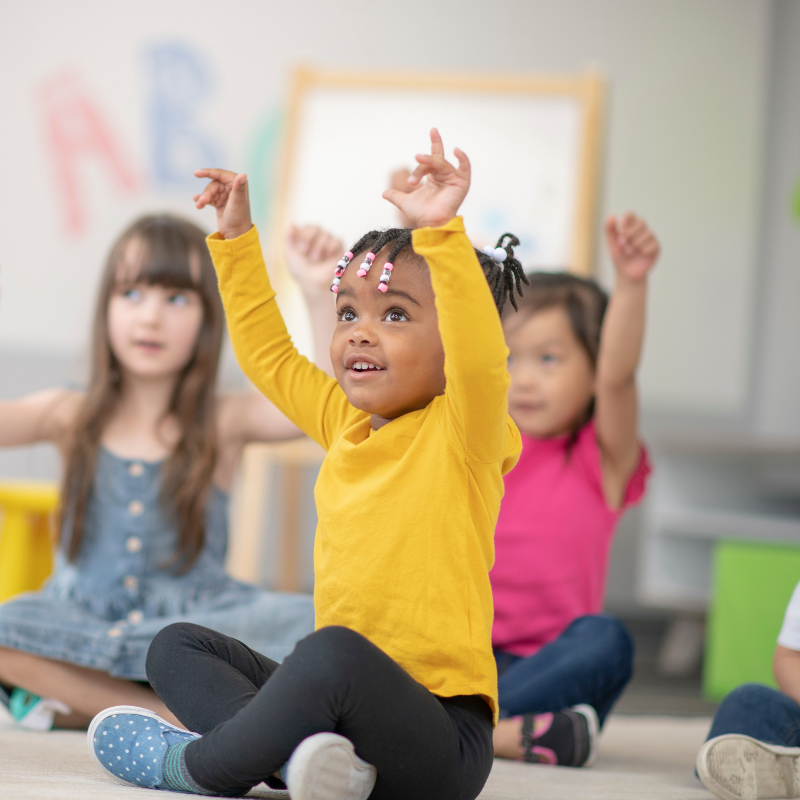
I continued to teach through real-life context (this was a game changer). This is where the progress of understanding actually happened. Instead of isolating the skill, I made sure all adults in my classroom were making an effort to incorporate the teaching of body parts throughout the day for all SEN and autistic learners. When getting ready for playtime, instead of hearing, “put your hat on”, it became, “put your hat on yourhead”. When noses were runny, instead of “go get a tissue” it was now, “get a tissue and wipe your nose”. It was this small but highly important change in my classroom and with staff that meant learning the names and location of body parts became generalised! Not through one activity. Through consistent use across the day.
I modified all of the above for my Gestalt Language Processors (GLP). For learners that used scripts and chunks of language we attempted to be consistent with our language and use it in different locations. We also honored scripts. If a child said, “Head, shoulders, knees and toes!” we acknowledged this communication and responded by gently expanding, ‘Yes Head!, Put your hat on your head!”.
We avoided, flashcards with single words, quizzing (“What is this?”), forcing imitation (“point to your nose”) and isolated labeling without context. By consciously making the effort to ground in real-life experience we were able to observe our learners acting out routines that included using the names of body parts, repeating phrases in the correct context and joining in songs.
Over time, this allowed our GLP learners to move toward meaningful self-generated language.
Throughout all of this, I realised something important. Not all activities are equal. Some keep children busy. Others build real understanding. Throughout my twenty years of teaching, I refined the activities I used so they consistently supported body awareness, communication and generalisation. Those are the activities that made the biggest difference in my classroom, and they’re the ones I’ll share with you next.
If you’d like to save these ideas for later or come back to them, you can pin this image below: